If you’ve been searching for digital product launch ideas that go beyond vague advice, you’re in the right place. We’re breaking down 12 real, actionable ideas you can start planning today, along with what makes each one work and how to set yourself up for a successful launch.
Whether you’re brand new to selling digital products or you’ve tried before without much traction, this guide gives you a clear path forward.

What Makes a Digital Product Launch Successful
A great product idea alone won’t guarantee sales. The launches that tend to perform well share a few common traits that are worth understanding before you pick your format.
You need an audience, even a small one, that trusts you and wants what you’re offering. A launch to 500 engaged followers will almost always outperform a launch to 5,000 cold strangers who have no connection to your work.

Pricing matters more than most creators expect. Products priced too low can feel disposable, while products priced too high without clear value signals can stall completely. Knowing your audience and researching comparable products helps you find the sweet spot before you go live.
12 Digital Product Launch Ideas to Consider
1. PDF Guides and Ebooks
A well-written PDF guide is one of the easiest digital products to create and launch. You can package knowledge you already have into a downloadable document and sell it for anywhere from $7 to $50 depending on the depth and your audience.
The key is specificity. A guide titled “How to Meal Prep for the Week” will get lost, but “30-Minute Sunday Meal Prep for Busy Moms of Toddlers” speaks directly to a person with a very specific problem. Specificity is what makes people feel like the product was made for them.
You don’t need fancy design software to create a polished PDF. Tools like Canva have templates that look professional and take a fraction of the time of building something from scratch. Once it’s done, you can sell it on platforms like Gumroad, Payhip, or directly through your own website.
2. Online Courses
Online courses are one of the highest-revenue digital product formats available to creators. A well-structured course can sell for anywhere from $97 to several hundred dollars, and if the content delivers on its promise, students become your best marketing.

The biggest mistake people make with courses is trying to teach everything they know. Your course should solve one specific problem from start to finish, and every lesson should connect back to that core transformation. Think about what your audience is struggling with right now and what outcome they’re desperate to reach.
Platforms like Teachable, Thinkific, and Podia make it relatively easy to host and sell your course without needing a developer. You can start with just video, slides, and a workbook, then add more as your course matures.
3. Templates
Templates are one of the most underrated digital product launch ideas because they feel simple, but the demand is enormous. People will pay for a Notion template, a Canva social media kit, an email sequence template, a resume template, or a budget spreadsheet without hesitation if it saves them hours of work.

The appeal of templates is that buyers get an immediate result. They download, customize, and use it the same day. That kind of instant gratification leads to strong reviews and repeat customers.
You can sell templates on Etsy, your own website, or Creative Market depending on your niche. Many creators who start with one template quickly expand into template bundles, which raise the perceived value and the price point significantly.
4. Printables
Printables occupy a sweet spot between templates and physical products. They’re digital files that buyers print at home, which means you still have zero fulfillment costs, but the product feels tangible in a way that other digital products don’t.

Popular printable categories include planners, journals, wall art, educational worksheets, party decorations, and holiday-themed items. Etsy is the dominant marketplace for printables, though many sellers also run their own shops to keep more of their revenue.
Printable launches tend to benefit from seasonal timing. A fall planner launched in late August, a Christmas activity pack launched in October, or a New Year goal-setting journal launched in December can see significant spikes in sales if you time your launch well.
5. Stock Photos or Digital Art
If you have photography or design skills, licensing your images as stock content is a digital product launch idea that continues earning long after the initial work is done. You upload once and collect royalties whenever someone purchases a license.

Stock photography platforms like Shutterstock, Adobe Stock, and Pond5 handle the marketplace and payment processing for you. Alternatively, you can sell directly through your own site or platforms like Creative Market, where you keep a higher percentage of each sale.
Niche stock photos often outperform generic ones. Photos of underrepresented communities, specific professions, cozy home settings, or seasonal moments tend to fill gaps that mainstream stock libraries don’t cover well.
6. Membership Communities
A membership is a recurring revenue model that rewards you for consistently delivering value. Members pay monthly or annually for access to exclusive content, a private community, live calls, or a combination of all three.

The launch of a membership requires more planning than a one-time product, but the payoff is a predictable income stream that grows as you add members. Many creators launch with a founding member rate to reward early joiners and build momentum before the doors officially open.
Platforms like Patreon, Circle, and Kajabi all support membership models with different levels of customization. The right platform depends on whether you want to prioritize community features, content delivery, or a polished branded experience.
7. Presets and Filters
Photo presets are a wildly popular digital product in the photography and lifestyle creator space. If you have a recognizable editing style, packaging your Lightroom presets or VSCO filters into a product is a natural extension of the work you’re already doing.

Preset packs typically sell for $15 to $45 and can be bundled by mood, season, or use case. A “Golden Hour Travel Preset Pack” or a “Bright and Airy Food Photography Bundle” gives buyers a clear picture of what they’re getting and who it’s for.
The launch strategy for presets leans heavily on visual proof. Before and after images showing the transformation are the most effective marketing you can do, because the product speaks for itself when people can see exactly what it does.
8. Digital Planners
Digital planners are designed to be used on tablets with apps like GoodNotes or Notability, which has made them a growing category over the past few years. Unlike printables that get printed once, a digital planner gets used repeatedly, which increases the perceived value.
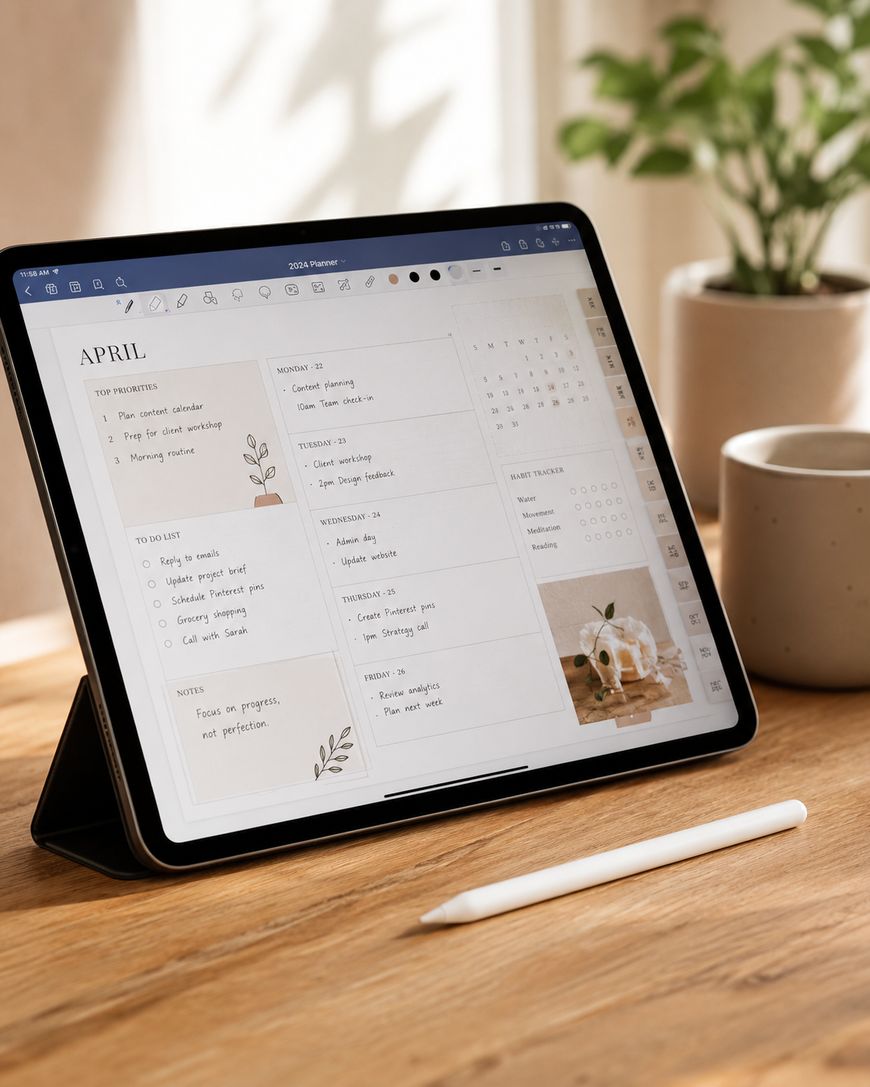
You can create digital planners in Canva or with dedicated tools like Keynote or PowerPoint, then export them as interactive PDFs. The more functional and visually appealing the layout, the more likely buyers are to share it with their community.
Niche digital planners tend to outperform general ones. A planner designed specifically for content creators, homeschooling families, or small business owners has a built-in audience that will recognize it was made with their exact needs in mind.
9. Mini Courses and Workshops
Not every course needs to be a comprehensive 10-module program. Mini courses and recorded workshops are shorter, focused products that solve one specific problem and sell at a lower price point, usually between $27 and $97.
The advantage of a mini course is that it’s faster to create, easier to launch, and acts as a natural entry point into your product ecosystem. Someone who buys your $37 mini course on Instagram Reels is a warm lead for your $197 full social media course.
Recorded workshops are especially useful if you already teach live sessions. If you’ve ever done a webinar or live training, repurposing that content into a standalone product takes minimal extra effort and creates a new revenue stream from work you’ve already done.
10. Audio Products and Podcasts
Audio products are an emerging digital product category that includes guided meditations, affirmation recordings, sleep stories, language learning tracks, and productivity playlists. If you have a good voice and knowledge your audience wants to internalize, audio is worth exploring.

You can sell audio products directly through your website, package them as part of a membership, or list them on platforms like Bandcamp. The production barrier is lower than video, since you only need a decent microphone and a quiet space to record.
Guided meditations and sleep content in particular have seen strong demand as more people actively invest in their mental wellness. If you work in wellness, coaching, or mindfulness, an audio product is a highly relevant digital product launch idea worth testing.

11. Coaching Packages with Digital Deliverables
Coaching sits at the intersection of a service and a digital product, especially when you package it with digital resources. A coaching client might receive a workbook, a resource library, a personalized action plan, or access to recorded training as part of their package.
Structuring your coaching with digital deliverables not only increases the perceived value of your offer but also creates assets you can reuse across multiple clients. Once you’ve built the workbook or resource library, the hard work is already done.
The launch of a coaching package is often more relationship-driven than other digital products. A waitlist, a discovery call process, or a beta round with a small number of clients at a reduced rate can all be effective ways to fill your first cohort.
12. Done-for-You Resource Kits
Done-for-you kits package everything a buyer needs to accomplish a specific task without having to build anything from scratch. Examples include a complete social media caption bank, a year of email newsletter templates, a brand kit with logos and color palettes, or a full content calendar with prompts.
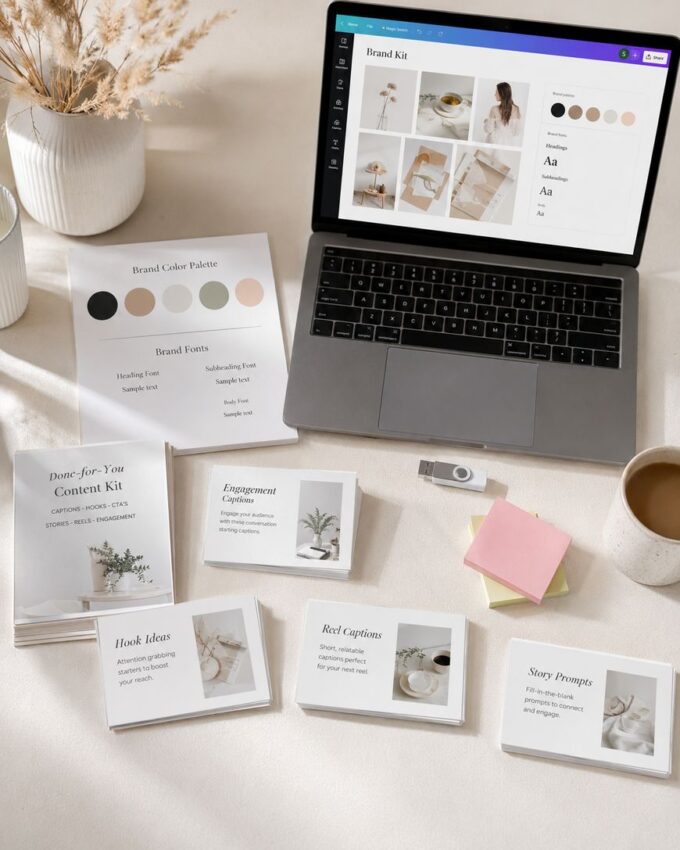
The appeal is time savings. Buyers aren’t paying for information, they’re paying for ready-to-use materials that let them skip the creation process entirely. That perceived value allows done-for-you products to command higher price points than standalone guides or templates.
Done-for-you kits work especially well when your audience is made up of other creators, business owners, or professionals who are busy and willing to pay for quality resources. Position these products around the hours saved rather than the features included.
How to Choose the Right Digital Product Launch Idea for You
With so many options, the right digital product launch idea for you comes down to three things: what you know, what your audience needs, and how much time you have to create before your launch.
If you have deep knowledge in a subject and an engaged audience that trusts your expertise, a course or membership will likely generate the most revenue. If you want something faster to create and test, a template, PDF guide, or printable will get you to market much sooner.
Don’t try to launch everything at once. Pick one idea, commit to it, create a minimum viable version, and launch to your existing audience before you invest in paid promotion or a big public rollout.
Planning Your Launch Timeline
A realistic launch timeline for most digital products is four to eight weeks from idea to sale. That includes creation time, setting up your payment processor and delivery system, building a simple sales page, and warming up your audience.
Your audience warm-up period is not optional. In the weeks before your launch, you should be talking about the problem your product solves, sharing related content, and collecting feedback or questions that help you refine your messaging.
An email list, even a small one, is your single most valuable launch asset. Social media reach is unpredictable, but an email from someone your subscribers already trust lands differently than an ad from a stranger.
Why Digital Products Are Worth Your Time
Before we get into the ideas, it helps to understand why digital products have become one of the most popular ways to build income online. You create something once and sell it repeatedly, with no inventory, no shipping, and no restocking fees.
The startup costs are low compared to physical products, and your earning potential scales with your audience rather than your hours worked. Once you find the right digital product launch idea for your skills, the business model becomes surprisingly straightforward.
Digital products also give you flexibility. You can launch something small, test it with your existing audience, and refine it based on real feedback before you invest more time or money into a bigger project.
Q&A: Common Questions About Digital Product Launch Ideas
What is the easiest digital product to launch for beginners?
PDF guides, checklists, and simple templates are the easiest digital products to launch if you’re just starting out. They require minimal technical setup, can be created with free tools like Canva, and can be listed on platforms like Gumroad or Etsy within a day.
How much money can you make from digital products?
Income from digital products varies widely depending on your audience size, product price, and marketing consistency. Some creators earn a few hundred dollars a month from passive sales, while others build six-figure businesses through a combination of courses, templates, and memberships.
Do you need a large following to launch a digital product?
No, you don’t need a large following to have a successful launch. Many creators make their first sales to audiences of a few hundred people by focusing on trust and relevance rather than reach. A small, engaged audience that needs exactly what you’re offering will outperform a large, disengaged one every time.
How do you price a digital product?
Research what comparable products sell for in your niche, then consider the transformation your product delivers and the audience you’re selling to. Most beginners underprice. If your product saves someone five hours of work or helps them solve a problem they’ve struggled with for months, pricing it at $7 undervalues both the product and your expertise.
What platform is best for selling digital products?
The best platform depends on your goals. Gumroad and Payhip are beginner-friendly and have low fees. Etsy is excellent for printables and templates with built-in search traffic. Teachable and Thinkific are better for courses. If you want full control and to keep the most revenue, selling directly from your own website with a tool like ThriveCart is worth the setup effort.
Can you launch a digital product with no audience?
You can, but it’s significantly harder. Building an audience before you launch is strongly recommended. If you’re starting from zero, focus on one platform where your ideal customer already spends time, create content that addresses their real problems, and build your email list from day one.
Conclusion: Your Next Step With Digital Product Launch Ideas
The right digital product launch idea is already within reach, and you don’t need to wait until you feel completely ready to get started. Pick one idea from this list that aligns with your knowledge and your audience’s needs, set a launch date four to six weeks out, and start creating.
We’ve seen creators go from idea to first sale in a matter of weeks when they commit to one product and one audience instead of trying to do everything at once. Your first launch won’t be perfect, but it will teach you more than any course on the subject.
Start small, launch with intention, and let your audience guide what comes next.


Leave a Reply